

I clearly remember my friend “Ahmed.” He had unmatched passion for his new business idea: a unique café offering a complete cultural experience. He invested all his savings, and even borrowed more, to turn his dream into reality. He spoke enthusiastically about the décor, the innovative beverage menu, and the poetry evenings.
But less than a year later, I saw him sitting in front of me, his eyes filled with regret, asking:
“Why, my friend? Why didn’t my project succeed despite all this effort and passion?”
My answer was clear—and painful at the same time:
“Because you didn’t conduct a feasibility study.”
How many beautiful dreams have been shattered against reality because their owners forgot that passion alone is not enough! If you, too, dream of starting your own business and aspire to turn your idea into a remarkable success, let me tell you this: pause for a moment! Before you lay the first brick of your dream, you must equip yourself with the most powerful tool that ensures your sustainability and growth: a comprehensive economic feasibility study.
To understand what it is and its main steps, keep reading.
What is an Economic Feasibility Study?
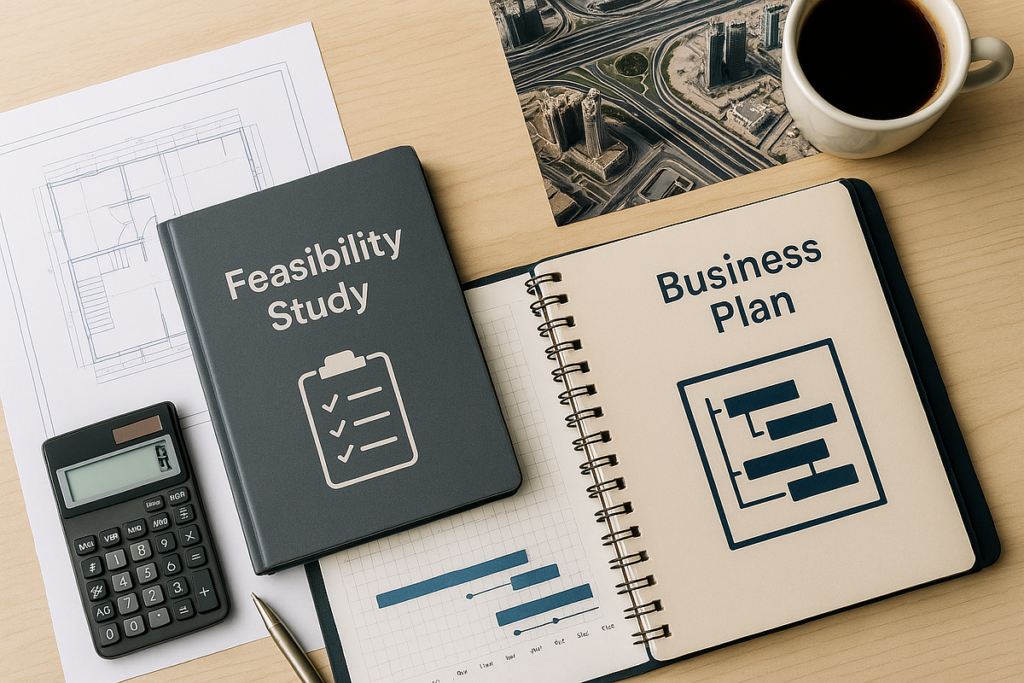
An economic feasibility study is like a compass that guides your project’s ship through the turbulent sea of business. It is a comprehensive process of analyzing and evaluating all aspects of your proposed project to determine its feasibility and potential success from marketing, technical, financial, and environmental perspectives. Its ultimate goal is to answer one decisive question: Is this project worth investing in or not?
Many people confuse a feasibility study with a business plan, so let me clarify the fundamental difference:
- Economic Feasibility Study: Comes first. It is a research and analysis process to evaluate the project idea before committing to it. Is the idea viable? Is there a market for it? Will it be profitable? It is like a “comprehensive medical check-up” for the project before it is born. If the results are negative, the idea may be abandoned or significantly modified.
- Business Plan: Comes second, after the feasibility study has proven the project is viable. It is a detailed document explaining how the project will be implemented. It includes objectives, strategies, organizational structure, marketing and financial plans, and how profits will be achieved. It is the “operational guide” for the project after the decision to proceed has been made.
In short, the feasibility study answers: “Should we do this project?”
While the business plan answers: “How will we do this project?”
What is the Importance of an Economic Feasibility Study?
A feasibility study is not just a routine requirement requested by banks or investors. It is your shield and your effective tool in the entrepreneurial journey. Here is why it matters:
1. Reducing Risks and Avoiding Major Losses
A feasibility study helps you identify potential challenges and obstacles before they turn into serious problems. It gives you the opportunity to develop alternative plans—or even withdraw from the idea if risks outweigh expected returns.
Example: If you are considering opening a seafood restaurant in an area far from the coast, the feasibility study may reveal the difficulty and high cost of sourcing fresh seafood daily, which would affect quality and profitability. In this case, you can change the location, adjust the menu, or abandon the idea before losing money.
2. Making Informed, Fact-Based Decisions
Instead of relying solely on intuition or passion, a feasibility study provides you with reliable data and figures. These become the foundation for your decisions—whether to proceed, adjust, or stop.
You may believe your product will generate high sales, but market analysis could reveal a very small target audience or limited purchasing power, prompting you to rethink your production scale or target segment.
3. Attracting Funding and Investment with Confidence
Investors and banks do not fund dreams—they fund well-studied opportunities. A comprehensive feasibility study is your gateway to securing funding, as it demonstrates that your project has a solid economic foundation and real potential for success.
When you present a detailed feasibility study that includes accurate financial analysis and realistic revenue projections, you increase investor confidence in your ability to manage the project and achieve returns.
4. Assessing Economic and Social Feasibility
Feasibility is not limited to financial profit. Successful projects contribute to both the economy and society. The study evaluates the project’s potential impact on job creation, local development, and even environmental effects.
Example: A recycling plant may not generate high profits initially, but the feasibility study may highlight its economic and social value in creating jobs, reducing pollution, and supporting the circular economy—making it attractive for government support or socially-driven investment.
5. Improving Operational Planning and Resource Allocation
Through technical feasibility, you can accurately determine the required resources (machines, labor, raw materials) and allocate them efficiently, ensuring operational effectiveness and minimizing waste.
For example, if you are planning to establish a factory, the technical study will define the appropriate machinery, production capacity, workforce needs, and even the layout of the production line.
Stages of Preparing a Comprehensive Feasibility Study
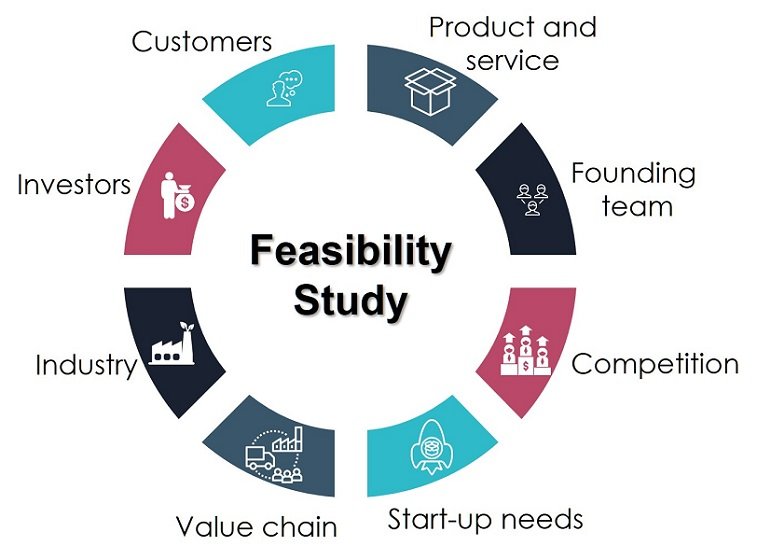
Now that you understand its importance, let’s walk through its main stages. Remember: each stage builds on the previous one.
1. Market Feasibility Study (Market Analysis)
This is where exploration begins. Your goal is to deeply understand the market you are entering:
- Who are your potential customers?
- What is the demand for your product or service?
- Who are your competitors?
- How will you reach your customers?
Example: If you are launching a language-learning app, this study will identify the target age group, most demanded languages, competitors, and how to price and promote your app.
2. Technical and Engineering Feasibility
This stage answers: “How will the product or service be delivered?”
- Location
- Equipment and machinery
- Workforce
- Operational process
Example: For a small clothing factory, this includes factory size, number of machines, workers, and production stages from fabric to final packaging.
3. Financial Feasibility
This stage translates everything into numbers:
- Capital costs
- Operating expenses
- Working capital
- Expected revenues
- Financial projections
- Key financial indicators (NPV, IRR, payback period, break-even point)
4. Environmental and Social Feasibility (Optional but Important)
- Environmental impact
- Social contribution
Example: A chemical factory must evaluate waste impact, while a training center evaluates its role in improving employment opportunities.
Common Mistakes in Feasibility Studies and How to Avoid Them
Even with proper steps, many fall into critical mistakes:
- Over-optimism: Unrealistic projections
- Ignoring competitors
- Inaccurate data
- Focusing on one aspect only
- Not updating the study
Be realistic, use reliable data, and maintain a comprehensive perspective.
Conclusion
The entrepreneurial journey is full of challenges—but also opportunities. A feasibility study is not an obstacle to your dreams; it is the bridge that safely leads you to success.
Do not let passion blind you to reality, and do not let excessive optimism trap you in illusions.
If the process feels complex, or you need expert guidance in this critical step, do not hesitate to seek support from International Expertise House (IEHAD).
We help you transform your idea into a well-structured, clear, and scalable project with confidence.